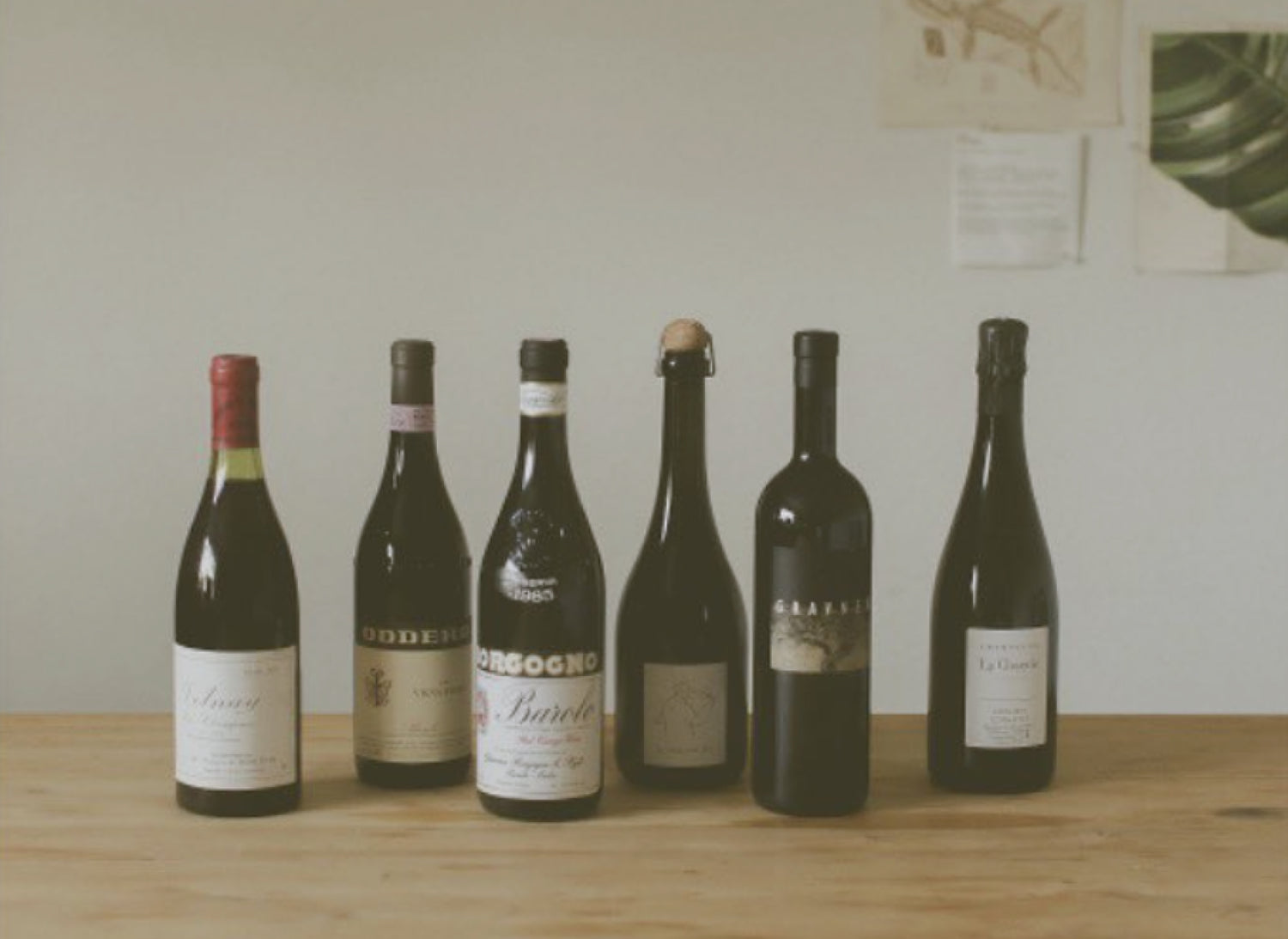
After a journey through the world’s great vineyards—Domaine des Epeneaux, Marquis d’Angerville, Domaine du Pélican, Alain Graillot, Dr. Loosen, Place of Changing Winds, Bindi, and Giuseppe Rinaldi among them—Tom, in the year 2020, laid the first stone of D’Arcy. He began with a humble parcel in Preda, near the fabled Cannubi, and with it, a quiet ambition to cultivate something exceptional.
At D’Arcy, the work begins in the vineyard, where time and patience take on their slow but necessary rhythm. When Tom first took on the lease, his thoughts turned immediately to the care of the vines. He converted the land to the Guyot Poussard pruning method, a practice gentle yet exacting, designed to honor the sap’s natural flow and keep the vines free from unnecessary stress. In this, he sought balance, not force. The rhythm of his labor is tied closely to the seasons, the growth of cover crops allowed to run its course between the vine rows, while the meticulous work of hand weeding near the roots speaks to a kind of reverence. Where the earth must be turned, it is turned; where the vine must be fed, it is fed—but all with a quiet deliberation, a reliance on the rhythms of the soil and its microbial life. This slow work, hand in hand with nature, gives rise to fruit low in yield but abundant in ripeness, with a fragrance that promises much.
In the cellar, Tom’s touch is equally measured. His years among the wise have shown him the delicate art of restraint. Each decision—when to destem, when to let the fruit rest on the stems—comes from a place of deep contemplation, a desire to coax the finest expression from what the land has given. He ferments in open-top vessels, watches carefully over indigenous yeast fermentations, limits racking, and allows gravity to do much of the work. The wines age in larger barrels, where simplicity becomes a form of precision. There is no haste here, only the pursuit of a certain purity, a clarity of purpose.
Tom's approach to the 2023 nebbiolo is defined by restraint and timing: fruit from the organically farmed Bricco San Pietro MGA in Monforte d'Alba was fermented with indigenous yeasts in open-top vessels, with a partial whole-cluster inclusion, then aged no more than twelve months in Garbellotto casks before spending 18 to 20 months in concrete — no racking, no fining, no filtration. The result is a wine of unusual delicacy: violet, dried cherry, and a thread of white tea on the nose, met on the palate by fine, almost weightless tannins. It rewards air in the glass now and will hold with ease through the late 2020s and beyond.